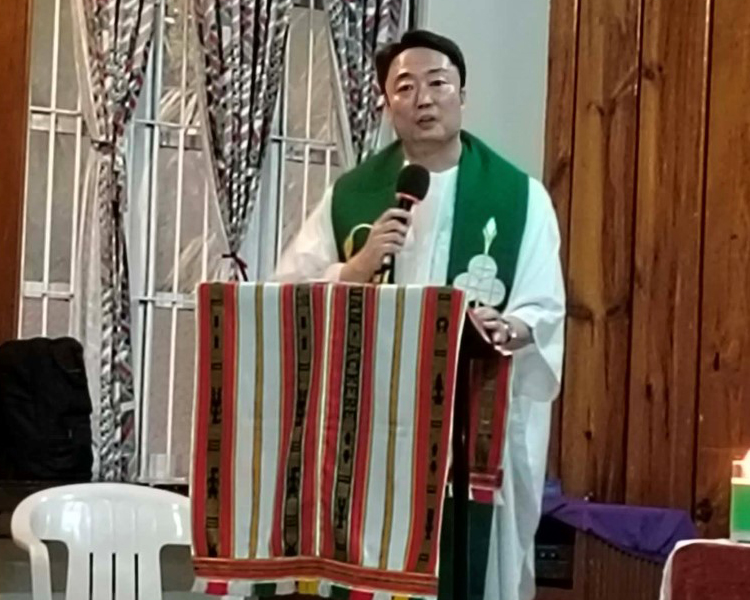
By Fr. Taemoon Kwon, SSC
I would like to share some reflection based on several key phrases from today’s Gospel.
First, the words: “This is the time of fulfillment.”
This tells us that mission begins in God’s time. Jesus does not speak of “someday,” but of “now.” Mission does not begin when we are ready. It begins when God is.
The same is true of our journey as Columban missionaries. We were not sent because we were always ready or complete, but because, even amid our inadequacies and fears, we trusted in God’s timing and set out. Mission begins not with our plans, but with the faith that the Kingdom of God is already near.
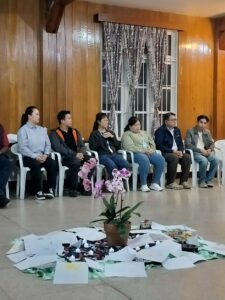
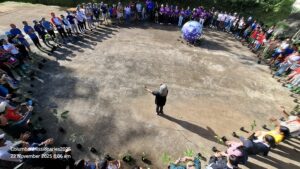
 At this moment, we are gathered in Baguio, Philippines, for the Young Columbans Meeting. What we are truly called to recognize and see in this gathering is not our shortcomings or what we have struggled with along the way, but gratitude. We are invited to remember all the events and people through whom God has been at work in our missionary journey and to give thanks for them—especially as we recall and express gratitude for every moment we have shared since continuing our online meetings from February last year.The second phrase is: “Come after me.”
Here we see that mission begins with relationship. Jesus does not first tell the disciples what to do. He does not say, “Go and preach” or “Go and convert people.” He says, “Come after me.”
At the heart of mission is relationship before task. The real question is not what kind of mission we will do, but who we are becoming as we walk with Christ.
This is also true of Columban mission. We are first called to be a community that follows Christ, and that life itself becomes a witness to the Gospel. There is no distinction between ordained members and lay missionaries; we work together and share our lives within that shared journey.
The third phrase is: “Immediately they left their nets.”
Mission is a spirituality of letting go. One of the most striking words in the Gospel of Mark is “immediately.” “They immediately left their nets and followed him.”
The nets were not just tools. They represented their livelihood, their identity, and their security. As missionaries, we too have let go of many nets—familiar cultures, languages, family, stability, and at times even our own plans and dreams.
However, the important question is this: What nets am I still holding on to today?
Some nets look holy. Some nets even look like mission. But they can still keep us from following freel
Finally, the phrase: “fishers of people.”
The purpose of mission is people. Jesus calls his disciples to become fishers of people. This does not mean possessing or controlling others, but inviting them into God’s life.
Within Columban tradition, this is very clear. We have paid attention not to numbers or results, but to the dignity of each person, the value of each culture, and the suffering and hope of each community. This is why today we focus our pastoral mission on the most marginalized and suffering—migrant workers, refugees, and our wounded planet.
Therefore, we do not go to places where people are strong. We go where people are hurting.
Dear brothers and sisters,
I have shared today’s Gospel from a missionary perspective.
As I conclude this homily, there is one suggestion I would like to offer you: humility.
For us, humility in this moment may mean allowing our ideas of mission to be questioned, our certainties to be softened, and our plans to be reshaped through one another.
So, I ask you, “Who can be humble?” and “What is the meaning of humility?”
My answer is, a humble person is someone who is ready to have his or her mind changed when listening to something good.
Moreover, I believe that being persuaded by goodness, rather than clinging to our original way of thinking, is crucial for this Young Columban meeting.
Being persuaded does not mean losing our authority or power. Rather, it gives real life to all of us and to our society.
So, let us, as Columban missionaries, allow ourselves to be persuaded by goodness—so that we may walk humbly with God, with one another, and with the people to whom we are sent — especially those who will unsettle us, challenge us, and change us.