By Lilibeth Sabado, Columban Lay Missionary
In 2009, I spent a couple of months immersing myself in communities in Mindanao where families of Overseas Filipino Workers (OFWs) lived. I felt it was important to understand the lives of those left behind so that I could more effectively accompany and pastorally support the OFWs I am blessed to journey with during my assignment in Taiwan. While much attention is often given to migrant workers abroad, I wanted to listen to the stories of the spouses, children, parents, grandparents, and relatives who carry the weight of separation at home.
Those months opened my eyes to the hidden sacrifices behind every departure. I encountered families living with both hope and loneliness, grateful for the opportunities that migration provided yet struggling with the emotional costs of prolonged absence. I listened to children speak about parents they saw only through screens, spouses who carried the responsibilities of family life alone, and grandparents who stepped into parental roles or the eldest child taking the role of a parent. The stories I heard then remained with me and have continued to shape my understanding of migration, family, and ministry.
On the other hand, I have also met families who have become dependent on the regular remittances sent by their loved ones overseas. In some cases, family members stop working and rely solely on this support. I have also observed how the steady flow of money can make it difficult to distinguish between wants and needs, leading to unnecessary spending and unrealistic expectations. This highlights the need for responsible stewardship, financial literacy, and shared family responsibility alongside the sacrifices of OFWs.
The experiences of OFW families are far from isolated. They are part of a reality affecting millions of Filipinos. In recent years, according to the data from the Department of Migrant Workers (DMW), nearly 7,000 Filipinos have been leaving the country each day in search of work and opportunities abroad. Behind these numbers are mothers and fathers saying goodbye to their children, husbands and wives enduring years of separation, and young people learning to navigate life without the daily presence of a parent. While labor migration has contributed significantly to the Philippine economy and improved the material conditions of many families, it has also created a generation of children who silently bear the emotional costs of separation.
Now that I am assigned in my home region, those experiences have taken on a deeper meaning. It has been my hope to begin a support group for the children of OFWs. Although there is a growing recognition of the need to support children of OFWs, establishing a dedicated program in our area has not yet become a pastoral priority. The stories and experiences of these young people remind us that their needs are real and deserving of our attention. It is my hope that this ministry can help fill that gap and provide a space where they feel seen, heard, and accompanied. Such a ministry would not only support their emotional and spiritual well-being but also affirm their dignity and strength as they navigate life with one or both parents working abroad.
Being here in Negros Island for the past year, I no longer hear these stories only through interviews and conversations. I witness them in the lives of the people around me. One experience remains deeply etched in my memory: a neighbor who had worked abroad for many years finally came home—but not in the way her family had dreamed. She arrived inside a coffin. Like many OFWs, she left home carrying hopes of providing a better future for her loved ones. Instead, her family was met with grief and loss―a painful reminder that behind every migrant worker is a family whose lives are profoundly affected by the risks and sacrifices of migration.
Another story that touched me deeply was that of a mother who left her three-year-old daughter to work overseas. The child was too young to understand why her mother had to leave. She could not comprehend the economic pressures that forced such a difficult decision. She only knew that the person who hugged her, comforted her fears, and tucked her into bed each night was suddenly far away. Her story reminded me that migration often requires parents to make heartbreaking choices―to choose between being physically present for their children and providing the resources their children need to survive and thrive.
Yet amid these struggles, I have also witnessed remarkable examples of love and commitment. One such story involves a partner who willingly cared for her girlfriend’s child while her partner worked abroad. Though not bound by blood or marriage, she embraced the responsibilities of parenthood and became a stable presence in the child’s life.
I was also moved by the story of a student who celebrated her eighteenth birthday towards the end of her retreat here in the center. For many young Filipinas, a debut is a significant milestone—a celebration shared with family and loved ones. Yet for this young woman, the occasion carried a bittersweet reality. Her parent working overseas could not be physically present to celebrate with her, but only through a video call. Upon the request of the parent recognizing the importance of the occasion, the teacher in charge organized a simple celebration to mark the milestone. What could have been a lonely day became a memorable and joyful experience.
The celebration was simple, but it reflected something profoundly important: the power of community. In that moment, the teacher became a family that affirmed her worth and accompanied her during a significant moment in her life.
These stories reveal a reality that is often overlooked. The children of OFWs are not merely recipients of financial support and educational opportunities. They are young people carrying complex emotions—longing, loneliness, gratitude, confusion, resilience, and hope. While remittances help provide food, education, and security, they cannot fully replace the presence of a parent during moments of joy, fear, uncertainty, and growth.
As communities, schools, churches, and organizations, we are called to accompany these children more intentionally. They need safe spaces where they can share their stories without fear of judgment. They need mentors who will listen, teachers who understand their struggles, and communities that will remind them that they are valued and loved. For while parents may cross oceans to provide for their families, every child deserves a community that walks beside them and reminds them that they are never alone.
I feel deeply blessed that this hope is gradually becoming a reality. Together with my fellow lay missionaries, we have begun networking with one of the colleges here in Negros Occidental as a possible venue for this ministry to support the children of OFWs. We are equally grateful for the opportunity to partner and collaborate with the Presentation Sisters in this new ministry. Their presence, experience, and commitment to young people bring encouragement and hope as we seek to create a supportive and nurturing community for children whose lives have been shaped by migration.
It is our hope that this emerging ministry for children of OFWs will become a space where young people can find encouragement, healing, and hope. More importantly, we hope to help them discover that while migration may separate families geographically, they are never alone in their journey.
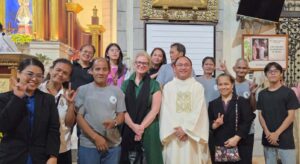
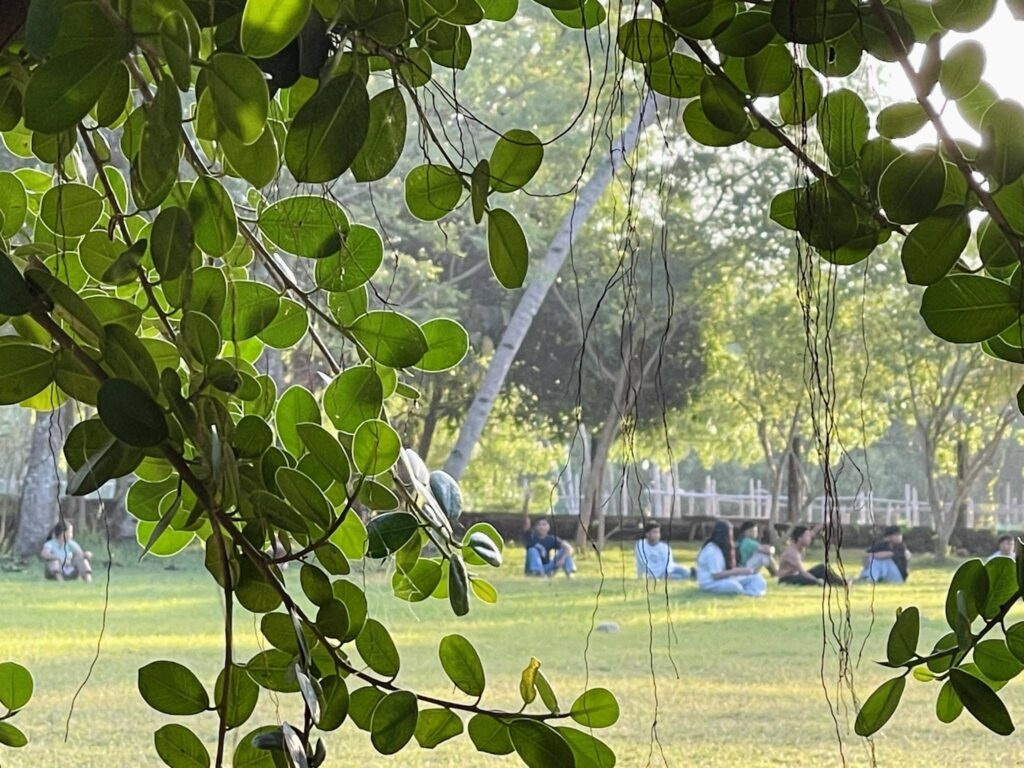
Featured Image above:Behind every OFW’s sacrifice is a child learning to wait with hope. (Photo: Lilibeth Sabado)