By Fr. Louie Ybañez, Pakistan
One of the great privileges of missionary life is the opportunity to encounter cultures profoundly different from one’s own. In interior Sindh, one immediately senses a heritage that is both ancient and intimately shaped by the land itself. This culture is not merely observed – it is felt in the rhythms of daily life, in the symbols people cherish, and in the rituals that carry meaning far deeper than religious identity alone.
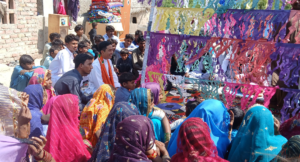
During the winter months – from November to February – the Parkari Kohli community celebrates the wedding season with great joy and festivity. Having officiated countless weddings, I have come to appreciate how profoundly symbolic these celebrations are. What strikes me most is how each gesture and ritual reflects a deep sense of communal interconnectedness – linking families not only to one another, but also to the land and its harvest that sustain their lives.
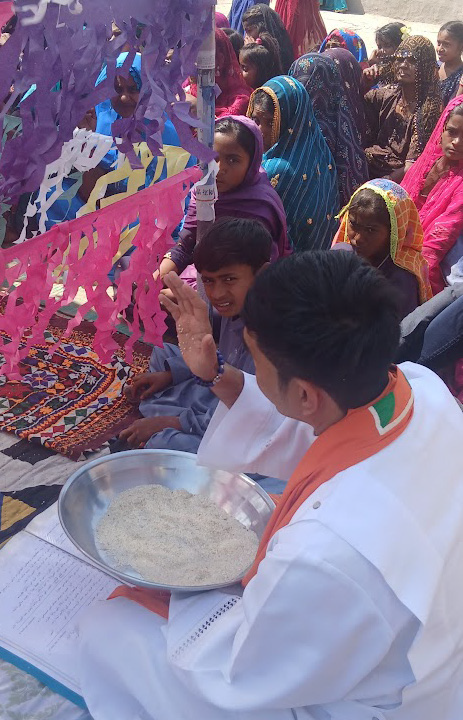
In Parkari Kohli weddings, the ritual elements carry rich symbolic meanings. The weddings use husked coconut that is alluded to fertility, cloves, cardamom, dried dates, and Gurr or hardened sugar. Rice, a staple of the harvest, is used by mothers as they offer their blessings upon the couple – a gesture of nurturance, fruitfulness, and continuity. In an inculturated Christian marriage, these cultural symbols are reverently preserved and given renewed depth. The priest, too, blesses the couple by sprinkling rice, affirming both tradition and faith. The Bible is placed alongside these elements, and as the vows are proclaimed, the bride and groom rest their hands upon it – invoking their commitment to live according to the values of the Gospel. The vows unfold through a series of symbolic gestures. Among them is the Phira, in which the bride and groom circumambulate three times – walking around the sacred fire and the cross positioned at the center of the marriage canopy, known as the Rupwo. This canopy often adorned with rice grains, sindhur powder, and glimmering decorations, becomes a sacred space where culture and Christian faith meet, intertwining tradition, community, and covenant.
In many cultures – particularly in the West – marriage is understood primarily as a personal decision between two individuals. In Pakistan, however, marriage is far more than a private commitment; it is a deeply rooted family affair. Within tribal communities especially, it becomes a profoundly communal event, marked by the active participation and blessing of the entire community. The commitment binds families which is essential in surviving such a challenging environment.
I often find myself filled with quiet awe as I witness the many rituals and practices unfold – so simple, yet so deeply meaningful. No excessive and elaborate activities, no restless pursuit of extravagance. Everything is marked by restraint, shaped more by tradition than by display.
If anything is abundant, it is not luxury but life itself: the rhythmic chants of the women rising into the air, the unrestrained joy that accompanies the festivity, the careful attention to cultural customs, and the generous blessings offered by each person to the couple. In these moments, I sense that what sustains the celebration is not material grandeur, but the richness of shared faith, adherence to tradition, and community.
As I reflect more deeply on these wedding symbols, I cannot help but see how intimately they are bound to the land itself. The husked coconut, the rice grains, the cloves and cardamom, the dried dates and hardened sugar – all arise from the soil, from seasons of sowing and reaping, from human hands that depend upon the rhythms of nature. Even the fire at the center of the Phira and the decorated Rupwo or wedding canopy speak of elements drawn from the earth. A wedding, in this sense, is not only a covenant between two people; it is a quiet acknowledgment of dependence on creation.
Yet in the arid plains of interior Sindh, environmental fragility is never far from consciousness. Drought, water scarcity, soil degradation, and the uncertainties of climate increasingly threaten the very harvests that these symbols celebrate. When rice is scarce, when crops fail, when the land yields less than it once did, the symbols used in marriage rites take on a deeper expression. They are no longer simply signs of abundance; they become prayers for sustainability, resilience, and hope.
When I sprinkle the rice grains, I do more than a gesture of blessing. It is coupled with a prayer that quietly carries an ecological meaning – a reminder that every prayer for fruitfulness is also a prayer for the land that makes such fruitfulness possible. They remind the community that human love and commitment are inseparable from care for the earth. If marriage binds two lives together in fidelity, it also implicitly calls the community to fidelity toward the land that sustains them. In blessing the couple with rice and invoking fruitfulness, the community is, perhaps unknowingly, expressing a longing for harmony between human relationships and the fragile environment upon which all relationships depend.
Featured Image Above: Before the wedding rite begins, the rice grains are solemnly blessed, set apart as both a gift and a prayer. After the couple proclaims their vows with their hands placed upon the Bible, the blessed rice is gently sprinkled over them. This ritual symbolizes fertility, abundance, and the hope for a fruitful and blessed married life.