By Marjorie Engcoy, Co-worker
As a child, I often found myself gazing at the majestic silhouette of the Mt. Malindang Ranges located on the Zamboanga Peninsula in Mindanao. Rising above the horizon, it evoked a sense of wonder and mystery. I imagined the countless species hidden within its forests, marvelling at its grandeur. More than anything, it stirred within me a profound gratitude for the Creator, whose artistry is reflected in every mountain peak, forest canopy and flowing stream.
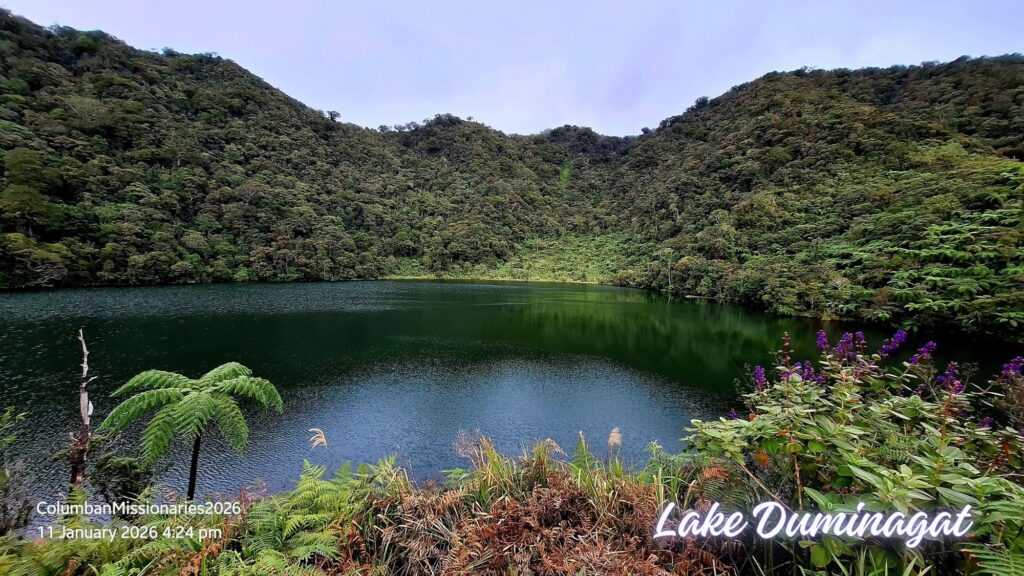
Among the many stories I heard about Mt. Malindang, one captured my imagination more than any other—the story of Lake Duminagat, a sacred lake nestled deep within the mountain ranges and revered by the Subanen people. The dream of seeing this mysterious lake took root in my childhood after my mother returned from Barangay Gandawan, a village at the foot of Mt. Malindang, where she conducted a livelihood seminar for the women in the community. Through her stories, Lake Duminagat became more than a geographical location; it became a symbol of beauty, mystery, and sacredness.
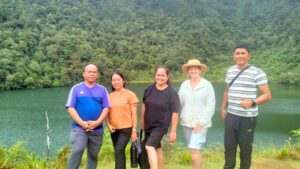
That childhood dream finally became a reality in November 2024 when I was blessed with the opportunity to visit the lake for the first time. Invited by Columban Fr. Dodong Matulac, I joined a trek via Don Victoriano, following the pathways that another Columban missionary, Fr. Brendan Kelly, who spent fourteen years accompanying the Subanen people of Don Victoriano, is familiar with.
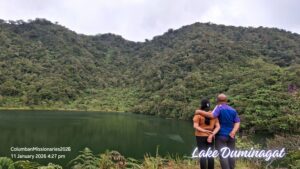
The journey to the lake was filled with anticipation. Yet as I approached this long-awaited destination, my emotions grew unexpectedly mixed. The beauty of Lake Duminagat was undeniable. Surrounded by forests and mountains, the lake radiated a sacred tranquility, untouched by time. It was easy to understand why generations of Subanen people have held this place in reverence. Yet alongside wonder came sorrow.
At the local registration area, I heard a remark that reflected a growing vision for the area: “Soon, tourists will swarm here at Lake Duminagat, and we will try to make it more beautiful.” That statement lingered in my mind.
How can one make more beautiful what God has already made beautiful beyond measure? Long before roads, tourism plans, and development projects, the Creator had already adorned this place with beauty no human intervention could improve. The sacredness of Lake Duminagat does not arise from infrastructure or commercialisation but from its deep connection to creation, culture, and spirit.
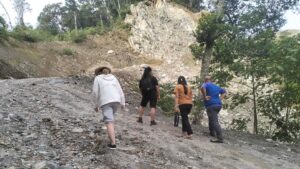
As I walked along the newly constructed road leading to and from the lake, I could not ignore the wounds etched into the mountains. The road carved through slopes that had once stood undisturbed. Trees that had silently witnessed centuries of history had been felled. Habitats were fragmented. Countless species of flora and fauna had been displaced. And what of the small vegetable farms of the Subanen people at the foot of the mountain? Some of these small farms lie in the path of rock cuts coming down from the top of the mountain, where construction is underway.
In the moment, the mountain groans. The Subanen couple I walked with on my second visit to the lake in early 2026 could not help but despair and express their grief. I remember my encounter with a Subanen woman who faces death threats day in and day out. She has worked alongside Columban missionaries for decades in reforestation and in protecting their home on the other side of Mt. Malindang. Mt. Malindang has been their pharmacy, market, hardware store, and library for many decades. But in recent years, they have witnessed the wanton destruction of the young forest they have toiled for most of their lives, under the guise of development. Her granddaughter asked her, “Why do we risk our lives protecting this mountain? Why do these people with big backhoes and trucks come to tell us that what we do is wrong and that what they are doing is right?”
The cries of creation are often silent, yet they are no less real. The fallen trees, disturbed soil, and disrupted ecosystems speak of a cost rarely acknowledged in development narratives. What many celebrate as progress can sometimes mask a deeper ecological loss.
This experience led me to reflect on the challenge facing many sacred and protected sites today. Development and tourism are often promoted as pathways toward economic opportunity. While these goals are understandable, they must be approached with humility and discernment. Places like Lake Duminagat are not merely tourist destinations; they are living ecosystems and sacred landscapes. They are homes to countless species and repositories of indigenous wisdom and spiritual heritage.
In his encyclical, Laudato Si’ – On care for our common home, Pope Francis reminds us that everything is interconnected. When forests are cleared, habitats are disrupted, and sacred places are reduced to commodities, we wound not only the Earth but also ourselves. Ecological degradation is ultimately a spiritual crisis, reflecting a failure to recognise creation as a gift rather than a possession.
The journey to Lake Duminagat became more than the fulfilment of a childhood dream. It became an encounter with both the beauty and the suffering of creation. It revealed the tension between preservation and exploitation, between reverence and consumption, and between seeing nature as sacred and as a resource.
As God’s children and members of the Earth community, we are called to listen attentively to creation’s songs and laments. The beauty of Lake Duminagat invites us to praise the Creator, while its wounds challenge us to examine our assumptions about development and progress.
Perhaps the most faithful response is not to ask how we can make such places more beautiful, but rather how we can protect the beauty that already exists. Lake Duminagat does not need to become more beautiful. It needs people willing to recognise, respect, and defend the sacred beauty it has always possessed.